How do we bring joy, peace, and happiness to the world? How do we stop unnecessary wars, conflict, and other forms of suffering caused by ourselves and others?
Recent conversations about things we experience in our own lives and what appears in the news from around the world, I am reminded of something the Emperor of the Mauryan Empire, Ashoka, wrote in one of his edicts around 261 BCE.
Ashoka’s campaign to conquer the Kalinga Kingdom caused immense pain, misery and devastation. Deeply affected by the suffering it brought, he suffered from intense guilt and ordered an edict to be written. These edicts were among the earliest systematic ways for a ruler to communicate directly with the public.
He wrote:
“One hundred and fifty thousand people were deported, one hundred thousand were killed and many times that number perished…”. On conquering Kalinga, the Beloved of the Gods [Ashoka] felt remorse, for when an independent country is conquered, the slaughter, death and deportation of people is extremely grievous: all suffer violence, murder and separation from their loved ones. Even those who are fortunate to have escaped and whose love is undiminished [by the brutalising effects of war] suffer from the misfortunes of their friends, colleagues and relatives. This [suffering] is shared by all men and is considered profoundly painful [by the Emperor]. Today if a thousandth part of those people who died when Kalinga was annexed were to suffer similarly, it would weigh heavily on him. The inscription of dharma has been engraved so that any sons or grandsons that I may have should not think of gaining new conquests … They should think only of conquest by dharma to be a true conquest.”
– Quoted from William Dalrymple, The Golden Road: How Ancient India Transformed the World, Bloomsbury, 2024
When we contemplated and discussed this passage during our recent gathering, many of us were struck by the power of these words. At the same time, it prompted a number of questions. How do we respond to situations that seem too large for any one individual to make a difference? How can we contribute to change and advance the ideas of non-violence, respect, morality and tolerance as expressed by spiritual traditions around the world?
Although there was a shared recognition that this is not an easy task, there was also a strong sense that each of us can do something. It begins with developing a clearer understanding of moral principles and striving to live in accordance with them. From there, we can seek to open ourselves up to the people, animals, and the environment around us. Then, no matter how small our contribution may seem, we can set something positive in motion.
By focusing on what is within our control, we can avoid becoming overwhelmed or feeling powerless. Through our daily prayers and actions, we can help cultivate wisdom and kindness in our own communities and, in doing so, contribute to a kinder and more compassionate world for the benefit of all.
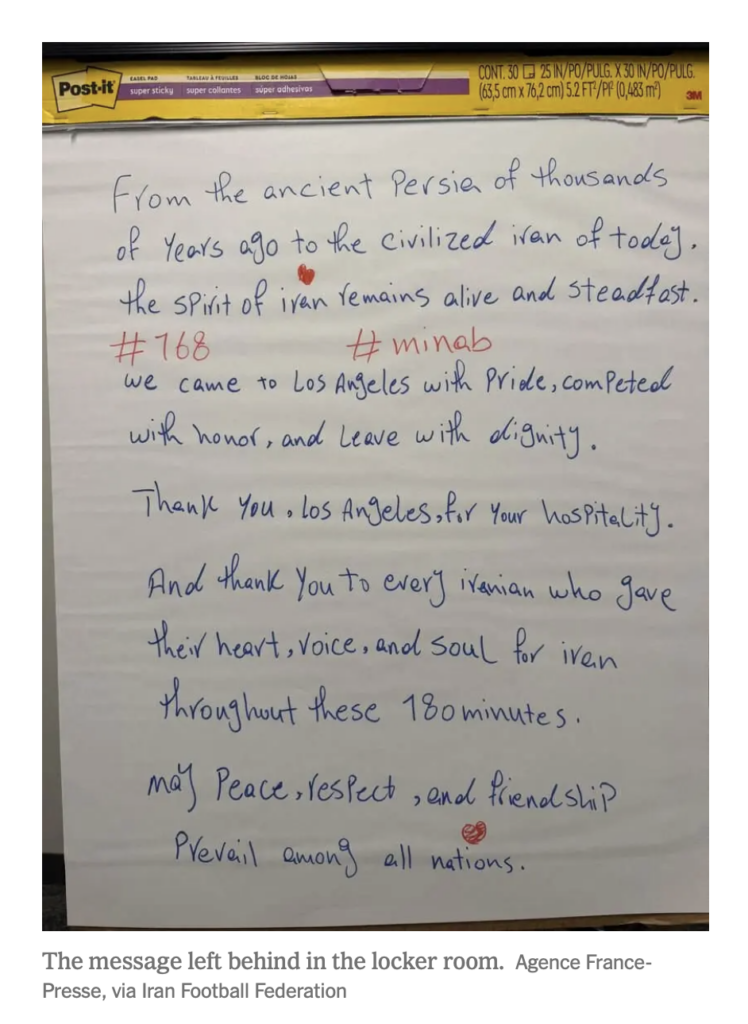
Amid today’s global conflicts, the Iranian football team shared a message after their World Cup match that echoes Ashoka’s vision:
Together, we can make this a reality.
Leave a Reply